About the Alliance for a Green Revolution in Africa
AGRA home
PDF version for printing
Posted: June 2007
The Challenges & Opportunities
Revitalising Small-Scale Farming Across Africa
Our Approach
A Plan for Change
Alliance Initiatives
The African-led Alliance for a Green Revolution in Africa (AGRA) is a dynamic partnership working across the continent to help millions of small-scale farmers and their families lift themselves out of poverty and hunger. Alliance programmes develop practical solutions to dramatically boost farm productivity and incomes while safeguarding the environment and biodiversity. To achieve this goal, Alliance partnerships focus on key aspects of African agriculture: from seeds, soil health and water, to markets, agricultural education and policy.
The Challenges & OpportunitiesAfrica has the singular and tragic distinction of being the only place in the world where overall food security and livelihoods are deteriorating. Over the last 15 years, the number of Africans living below the poverty line ($1/day) has increased by 50 percent, and it is estimated that one-third of the continent’s population suffers from hunger. In the past five years alone, the number of underweight children in Africa has risen by about 12 percent.
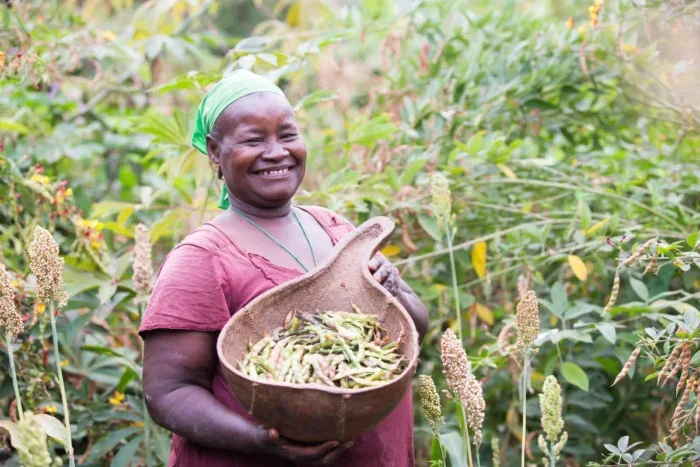
A root cause of this entrenched and deepening poverty is the fact that millions of small-scale farmers—the majority of them women working farms smaller than one hectare—cannot grow and sell enough food to sustain their families, their communities, or their countries.
The challenges confronting Africa’s small-scale farmers start in the field and extend across the entire agricultural value chain. Most African farmers can neither access nor afford basic farm inputs such as high-yielding seeds, organic and mineral fertilisers needed to replenish depleted soils, or simple water management systems to allow farmers to deal with erratic rains. In addition, good roads are scarce. Also lacking are strong market, extension, and finance systems. Small-scale farmers today also need the support of government policies that promote sustainable and productive African agriculture, and that ensure that farmers can get access to markets.
Due to these challenges, African leaders are calling for a revolution in agriculture that will enable the continent’s small-scale farmers to prosper. The Alliance is responding to this call by building African-led partnerships that draw upon the knowledge of Africa’s farmers, apply the lessons of modern agriculture, and work across the agricultural value chain while rigorously monitoring the impact in terms of equity and environmental sustainability.

We know that through dramatic improvements to agriculture, prosperity can replace poverty. In most modern economies, no lasting success has been achieved without first building a strong agricultural foundation.
In India, much of Asia, and Latin America the revitalisation of small-scale agriculture using hearty crop varieties and other tools of modern agriculture laid the foundation for the economic progress seen there today. This Green Revolution more than doubled agricultural production and saved hundreds of millions of lives. But this massive undertaking also had shortcomings: programmes sometimes exacerbated underlying inequity and the misuse of fertiliser and irrigation resulted in environmental damage.
Today, ending the poverty and hunger of hundreds of millions of Africans requires a clear focus on improving the lives of small-scale farmers, many of whom grow crops and raise livestock on their small plots of land. This agricultural revolution must rely on uniquely African solutions to uniquely African problems: solutions that improve the productivity, biodiversity, and nutritional quality of food crops; that practice sound ecosystem management across dramatically different environments; and that consistently promote equity. It must be pro-poor and pro-environment.
The Alliance is a direct response to African leaders’ calls to chart a path for prosperity that will spur African agricultural development. In particular, the Alliance responds to and strongly endorses the African Union’s (AU’s) Comprehensive Africa Agriculture Development Programme (CAADP). Developed by the AU’s New Partnership for Africa’s Development in 2002, CAADP presents a powerful vision for change and commits to seeking a 6 percent annual growth in food production by 2015. The CAADP vision specifically calls for “agricultural knowledge systems delivering profitable and sustainable technologies that are widely adopted by farmers resulting in sustained agricultural growth.”
The AU’s commitment to supporting its farmers was further strengthened through the 2006 African Fertiliser Summit, where African Heads of State promised concrete steps to provide farmers not just with soil nutrients but also with better transport, credit, seeds, irrigation facilities, extension services, and market information.
Many global and national leaders have recognised the critical importance of agriculture to Africa’s development, and they are ready to act. In his tenure as UN Secretary-General, Kofi Annan called for new “uniquely African Green Revolution—a revolution that is long overdue, a revolution that will help the continent in its quest for dignity and peace.”

The Alliance is working to break the cycles of hunger and poverty in Africa through partnerships that will provide small-scale farmers with the tools and opportunities they need to build better lives for themselves and their families. Our approach is African-led, participatory, comprehensive and aimed at promoting equity and environmental sustainability.
Our work begins in the fields working with small-scale farmers—the majority of whom are women—to learn from them and to understand their most pressing problems and the potential solutions. Individual farmers, women’s associations, and farmer unions are key partners. In addition, we are building partnerships with African governments; prominent national and regional African institutions; leaders of finance, business and science; and innovators and entrepreneurs involved across the agricultural value chain.
Our work is comprehensive in that it seeks to address critical challenges across the agricultural value chain, both on-farm and off-farm. These challenges involve access to farmer inputs: high quality seeds, organic and mineral fertiliser, and systems of reliable water management. They also involve access to “output” markets—to the crop storage, processing, transport, and finance that ultimately allow small-scale farmers to sell their harvests and make a profit.
Our work is shaped by the urgent need to act now to alleviate the dire poverty oppressing millions, as well as a commitment to change things for the long term. It is both pro-poor and pro-environment. Increased productivity on small-scale farms can simultaneously support agricultural growth and enhance the environment: rebuilding depleted, erosion-prone soil; conserving crop biodiversity; making wise use of limited water; and saving vast expanses of forest and savannah from cultivation.

The Alliance provides locally developed and adapted solutions that can be quickly scaled up to minimize the lag time in providing poor farmers across the continent with the options they need to improve their lives and incomes and protect the base of natural resources upon which their livelihoods depend.
Launched in 2006, the Alliance’s first collaborations are focusing on developing more productive and resilient varieties of Africa’s major food crops, adapted to thrive in a variety of conditions. These varieties will enable Africa’s small-scale farmers to produce larger, more diverse and reliable harvests.
In 2006, the Alliance also initiated programmes dedicated to enhancing agricultural education in Africa and programmes to monitor and evaluate all of our work. The latter will ensure that we learn as we go forward, making corrections in course as necessary, and providing all of our partners with concrete barometers of progress.
Over the next five years, we will systematically build on these first programmes, adding initiatives that address other key aspects of the agricultural value chain.
In 2007, we will launch a programme to improve the health of Africa’s soils, now the most depleted in the world. Currently, depleted soils depress yields and reduce the nutritional value of crops available to small-holder farmers.
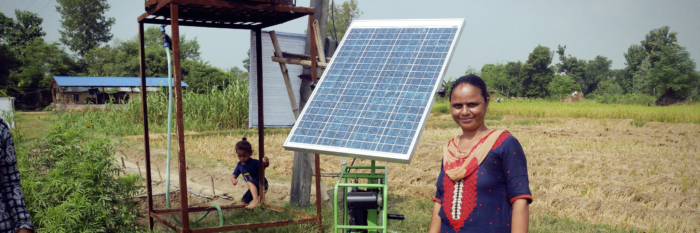
By 2008, we will launch a water management initiative to help Africa’s small-scale farmers get the most “crop for each drop.” It will provide low-cost and efficient water management systems, from human-powered treadle pumps to solar-powered drip agriculture.
By 2009, we will address major challenges in off-farm systems and markets, including improvements of crop storage, processing, and market transport.
Concurrent with all of this work, the Alliance will advocate for policies that support small-scale farmers, including policies that promote rural development and environmental sustainability, and that address trade and tariffs. Only with advocacy and policy change at national, regional, and global levels will small-scale farmers succeed in increasing yield, ending poverty and hunger, and lifting up the economies of Africa.
Also concurrent with these initiatives, the Alliance will work to attract a large and diverse group of donors. The Alliance seeks to develop a donor pool sufficient to provide the significant resources needed to revitalise African agriculture for small-scale farmers in the long-term.
In all, the Alliance envisions working in eight key areas to create a set of initiatives that will simultaneously address all key aspects of a functional, sustainable food production system in Africa, one that has as its core vision the improved well-being of small-scale farmers. Before launching each, we will consult with a full range of partners and experts to both build on their work and to collaboratively seek out new opportunities.

Few farmers in sub-Saharan Africa have access to new, improved varieties of locally grown food crops capable of producing abundant harvests in what are often harsh growing conditions. Closing this seed gap is a challenge given the continent’s diversity of staple crops and huge variety of pests, plant diseases, and other environmental stresses, as well as its variety of farming systems. Dietary preferences and taste are also important to ensuring the use of new varieties.
Alliance programmes are tackling these challenges through collaborative projects that bring farmers and scientists together to develop and distribute seeds suitable for local environments while also supporting genetic diversity and the rights of farmers to save seeds. The Alliance “Programme for Africa’s Seed Systems” (PASS) is funding African-led initiatives that are breeding new varieties of conventional maize, cassava, beans, rice, sorghum, and other crops to improve their resistance to disease and pests. The goal is to develop and release more than 1,000 improved crop varieties over the next ten years.
Initiative menuPoor soil health is directly linked to poor harvests. Africa’s food production lags because its soils are low in nutrients and organic matter, and have poor water holding capacity. Until those conditions are reversed, Africa’s soils will continue to degrade and its food situation will continue to deteriorate. Already, more than 75 percent of farmland in the region is severely degraded. This also leads to environmental destruction as farmers in depleted areas move into forests and other natural lands in search of more fertile land to support their crops.
The Alliance is developing a comprehensive Soil Health Initiative based on the understanding that rescuing African soils requires improving soil management practices and giving small farmers access to both organic and mineral fertilisers, along with the ability to use them efficiently and in ways that protect the environment. The Soil Health Initiative builds on the 2006 African Fertiliser Summit, which brought a new level of consensus among African leaders about the need to provide rural African farmers with the affordable soil nutrients they desperately need. The initative will also expand nitrogen fixing “dual use” legumes that can be effectively incorporated into many small scale cropping systems.
Initiative menuWater scarcity and inefficient water use is a major problem for African farmers. Over 90 percent of Africa’s poor farmers depend on rainfall, unpredictable at best, to sustain their crops. Few have access to irrigation—only 4 percent of farm lands in sub-Saharan Africa are irrigated compared to 37 percent in Asia. Degraded soils fail to adequately capture what little water is available.
Alliance programmes will provide farmers with greater access to water and more efficient use of this scarce resource. Africa’s small-scale farmers are interested in new ways to make the most from rainwater, such as trapping it in small ponds or cisterns, and employing better farming techniques that allow the soil to retain moisture and prevent erosion. The Alliance is also exploring easily adaptable “micro” irrigation techniques that use simple methods like foot-operated treadle pumps and low-cost drip systems to ensure that crops continue to thrive during periods of drought.
Initiative menuIncreasing food production in Africa is as much a market challenge as it is a technical undertaking. Many small-scale farmers will have little incentive to embrace the technical changes required to boost harvests if extra production fails to improve incomes—or, worse, causes prices to collapse. But today, African agricultural markets are often poorly organised, and lack the infrastructure that provides such basic market support as market price information, storage, transportation, processing, grading and standards, and assured prices. Building efficient and well-integrated input and output markets is key to creating incentives for the sustainable adoption of agricultural technologies by farmers.
Alliance market initiatives are exploring the market institutions, infrastructure, and arrangements that can give small-scale farmers more opportunities to earn income from a wider variety of farming activities. The Alliance and its partners are considering, among other things, how better storage, transportation and food processing, coupled with market improvements like regional commodity exchanges, farmers associations, market information systems, crop insurance and farm credit, can make the African Green Revolution a lasting force for economic progress.
Initiative menuWith its diversity of climates and poor access to basic farm technology and inputs, local agricultural expertise in the form of African-trained agriculture scientists and a strong network of regional agriculture extension services is essential to sustaining rapid agricultural development. But most African countries are spending one-third less per capita on agricultural research today than they were twenty years ago. Meanwhile, lack of public funding and bureaucratic challenges have further degraded the already poor state of extension services.
The Alliance recently launched a programme to bolster agricultural research by funding more graduate level training for a new generation of African agriculture scientists upon whom seed systems depend for growth and productivity. The programme expects to support an additional 170 M.Sc. and 80 Ph.D. plant scientists within five years. The Alliance is also developing an initiative to develop innovative extension services that can effectively help small-scale farmers adopt the new crop varieties, soil management techniques, and marketing programmes required to realize the full potential of African agriculture production. Under its Soil Health Initiative, the Alliance also will produce, M.Sc. graduates in the fields of soil science, agronomy, and natural resource and environmental economics.
Initiative menuThroughout all of its work, the Alliance will consult with and learn from Africa’s small-scale farmers. In the past, many well-intentioned efforts to boost production on Africa’s small-scale farms have failed because solutions were offered without first forming a partnership with farmers themselves to understand their needs and the most effective ways to deliver solutions.
In contrast, Alliance efforts seek locally driven and adapted approaches that draw from the deep well of knowledge accumulated by African farmers about the types of crops, farming techniques, climates, and other expertise that will be required to boost farm production and end hunger in Africa.
Alliance initiatives also are informed by the fact that women do most of the farm work in Africa. Revitalising African agriculture requires a partnership with the continent’s women farmers and an appreciation of how gender affects everything, from preference for farming tools and ability to buy seeds to land ownership, access to credit, and labor saving technologies for farm operations and food processing.
Initiative menuUntil now, the failure of Africa’s small-scale farms to rise above subsistence and provide adequate incomes for impoverished rural populations has been, in part, the result of poorly developed and coordinated national, regional and international agriculture policies. But there is a growing appreciation among African leaders of the relationship between policy and agricultural production.
The Alliance is committed to working with its partners to promote national, regional, and global policies that accelerate agricultural growth for small-scale farmers and that promote environmental health. Such policies may address high taxes and tariffs that raise the prices of agricultural inputs; smart subsidies to enable poor farmers to make use of new technologies; promoting the safe use of agricultural inputs; environmental monitoring and sustainability; trade; and the building of rural infrastructure. Only with strong advocacy and support of policy change will a sustainable and productive African agriculture become possible.
Initiative menuThe Alliance is an ambitious and multi-faceted undertaking, and is committed to building monitoring and evaluating systems that ensure that projects are well-managed and effectively improving the lives of small holder farmers. The Alliance is establishing a number of systems that will not only conduct panel surveys of key barometer countries over the next ten years but also will provide management oversight of Alliance initiatives in order to ensure that the perspectives and voices of small-scale farmers are incorporated into decision making. Monitoring and evaluation efforts will be focused on the small farmer.
The Alliance will utilize the latest information technology to collect and analyze information for each of its programmes, and will make this information transparent to all levels within the system in order to promote transparency, learning, and accountability.
Initiative menu
Pursued collectively and comprehensively, these multiple efforts have the potential to make a major difference for Africa’s small-scale farms and, through them, all of African society. It is undoubtedly a massive undertaking, but, as Mozambique’s President Armando Guebuza has said, Africa is up to the challenge. “I am sure that we will be able to end hunger and eliminate poverty,” he said, “because we Mozambicans are a heroic people. If we remain united, as we were united when we fought against colonialism and in the war against destabilisation, we will also be victorious in today’s fight against hunger and poverty.”
The time is ripe for a new, sustainable, and uniquely African Green Revolution.
top of the page