Opportunity NYC
Recognizing the Day-to-Day Challenges Faced by the Poor
Read the City of New York press release
Read the transcript of Judith Rodin's speech
News coverage
Opportunity NYC recognizes the day-to-day challenges faced by the poor: The mother who must make the difficult choice of making a doctor’s appointment or getting paid for a two-hour work shift that will help pay the monthly bills. Or, the eighteen year old who must choose between finishing school and getting a weekly paycheck. Opportunity NYC aims to change the economics of this kind of decision-making. By covering these immediate opportunity costs, the program will encourage people to make investments—like education and preventative healthcare—for the future.
Conditional Cash Transfers (CCTs)
CCTs are a recent, but popular tool in the field of international development. CCT programs are designed to alleviate poverty in the short-term by providing additional income to poor families, and to break the inter-generational cycle of poverty in the long-term by promoting greater investments in human capital. CCT programs originated in the late 1990s in Mexico with the creation of a program called Progresa (now Oportunidades), which serves more than 20 million Mexican families, and has been replicated in more than twenty countries. Progresa and other CCT programs have been subject to rigorous evaluation, which has documented reductions in the incidence and severity of poverty, as well as improvements in school enrollment and completion, health outcomes, and the incidence of malnutrition.
Opportunity NYC consists of three separate demonstration projects:
The Foundation has played a leading role in funding the design, implementation and evaluation of the NYC program, which will be entirely financed wholly through private sources in its pilot phase. In addition, the Foundation has helped broker relationships with other funders, which has allowed the City to meet its fundraising goal.
The design and evaluation of the program will be managed by the social science research firm MDRC. Implementation is being led by Seedco, a nonprofit intermediary organization specializing in workforce and community economic development, in conjunction with a network of community-based organizations.
Background
In 2006, New York City Mayor Michael Bloomberg announced his intention of exploring ways in which the city could expand opportunities for low-income families and reduce poverty across all five boroughs. A group of leading New Yorkers, including Foundation President Dr. Judith Rodin, were appointed to an advisory Commission to provide counsel on strategies and approaches.
The group deliberated for six months, meeting with experts, service providers, policymakers in Albany and Washington and advocacy organizations. From these meetings emerged a report that contains a number of ideas. From among these, Mexico's Progresa and CCTs in other countries sparked interest and intrigued Mayor Bloomberg and Deputy Mayor for Health and Human Services Linda Gibbs. The design of Opportunity NYC is informed in large part by Progresa and similar program models.
The New York City pilot, however, is unprecedented in three important ways.
First, CCTs have never before been piloted in the United States or western Europe – as such, Opportunity NYC represents an unparalleled attempt to test a successful anti-poverty program from the global South in the context of the global North.
Second, the New York City experiment is the first program to include a significant workforce participation component in addition to the traditional health and education components.
Third, Opportunity NYC is being piloted in the largest urban center in the United States, while the majority of CCT beneficiaries in the global South are located in rural areas.
In March 2007, Mayor Bloomberg and leaders of several New York City foundations announced the creation of a major new anti-poverty pilot CCT project called Opportunity NYC. The program was launched in September and by mid-December, the first incentive payments to families in the pilot program were made.
Local Engagement
Opportunity NYC to Share Strategies with New Learning NetworkInformation SourcesAmerican International Group (AIG)
The Annie E. Casey Foundation
Center for Economic Opportunity
John D. and Catherine T. MacArthur Foundation
MDRC
New York Community Trust
Open Society Institute (OSI)
Robin Hood
Seedco
The Starr Foundation
Sustaining Mexico's Progresa-Oportunidades Program; transcript
Oportunidades; Wikipedia articleProgresa-Oportunidades: A Success Story in Mexico
NYC Mayor Bloomberg, Delegation Visit
Mexico’s Oportunidades Program; 04/24/07
Dr. Rodin's remarks
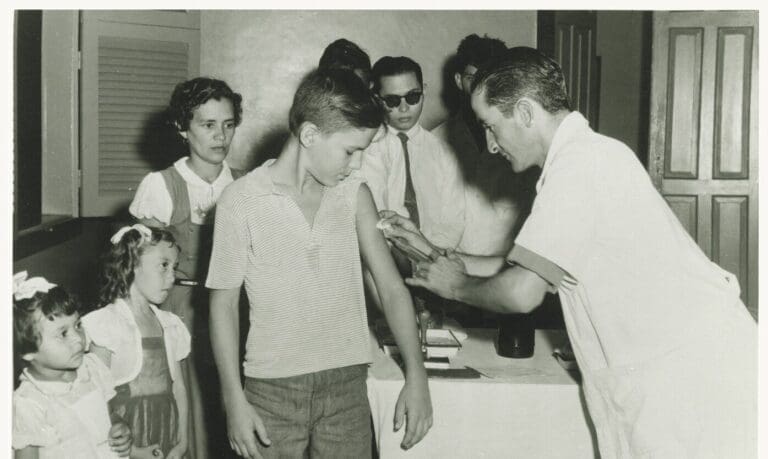
In 1997, Progresa was launched in several rural communities of Mexico. The program made cash donations contingent upon verifiable commitments from parents, such as making sure their children received immunizations and regularly attended school. The aim was two-fold:
Initially the plan was rolled out on a small-scale—to approximately 300,000 families -- with control groups to help measure outcomes. By 2001, the evaluation of the program had demonstrated positive results, and it was then implemented in Mexico’s other cities. Now called Oportunidades, the program has been so successful that it has been sustained through three Mexican presidential administrations.
The principles of Oportunidades have now been replicated and adopted in more than 20 developing countries, including Argentina, Bangladesh, Honduras, Jamaica, and Turkey. All of these Conditional Cash Transfer programs have been subject to vigorous and systematic evaluation and significant impacts have been detected.