

Zero Gap Fund: 2024 State of the Portfolio
Explore how catalytic capital is advancing bold solutions for people and the planet. This year’s report highlights measurable impact across 12 investments — from 1.6K+ new jobs to 2M tons of CO₂e emissions avoided — and shows what’s possible when private capital meets public purpose.
read the report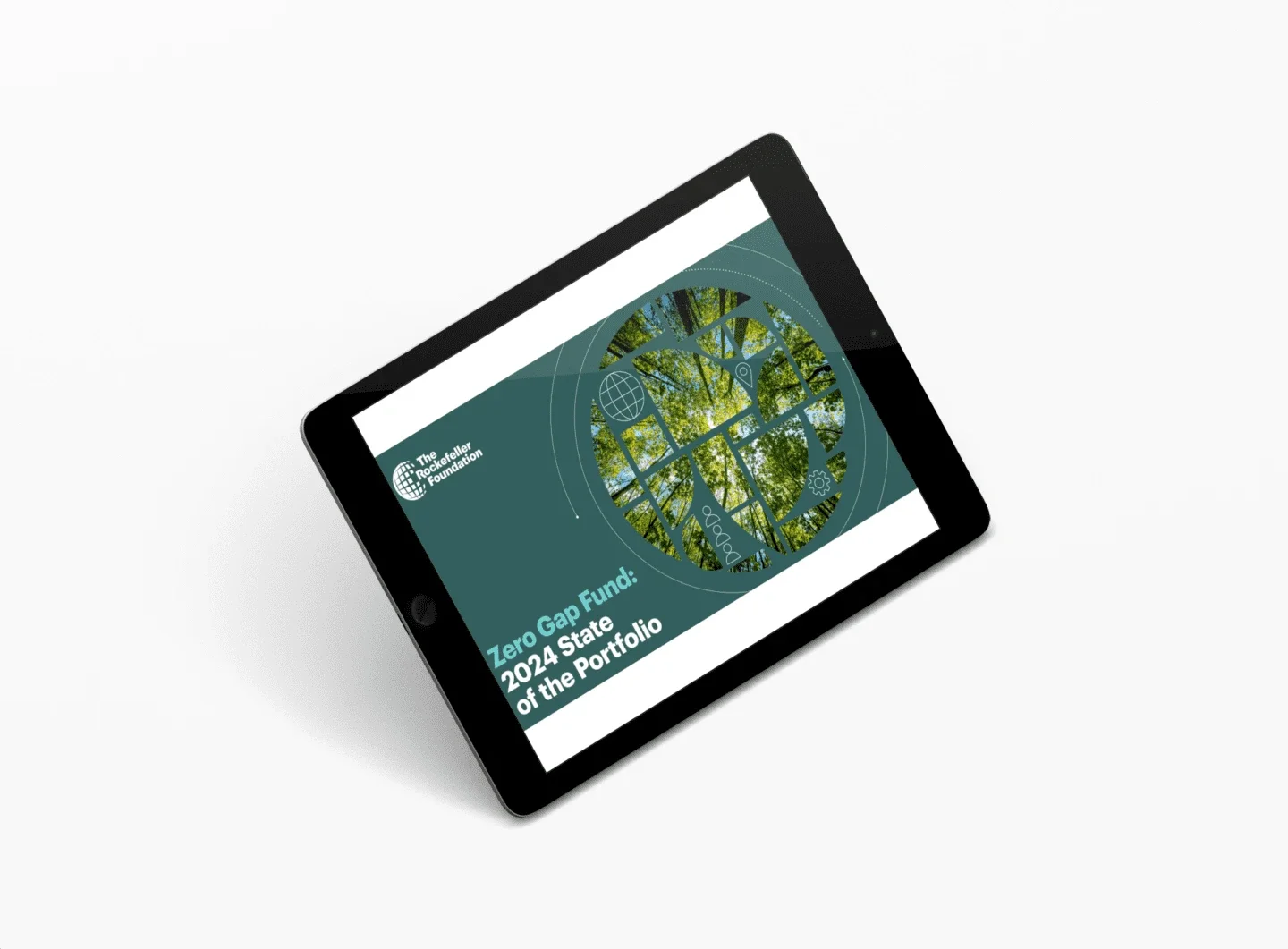
Featured Initiatives
Regenerative School Meals
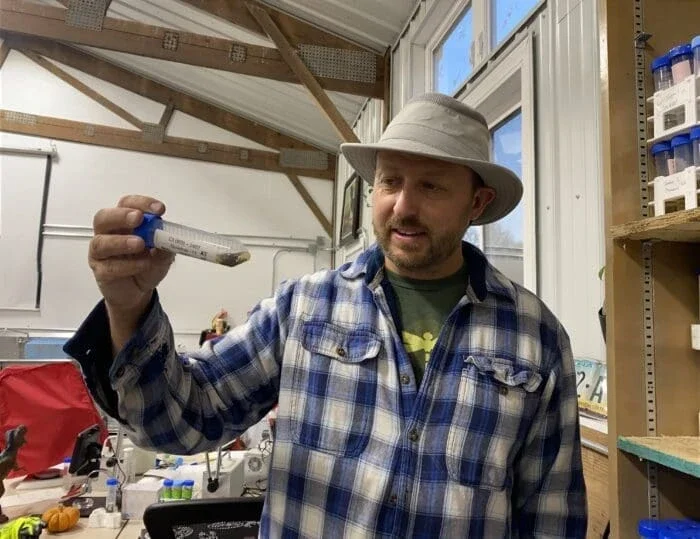
Over 300 million children go without a daily nutritious meal, while 1.5 billion farming families face climate and food insecurity. Our Regenerative School Meals initiative links school meals with regenerative agriculture — restoring soil, supporting farmers, and nourishing the next generation — to build a thriving food system from soil to school.
Learn about the initiative
Food is Medicine
The Rockefeller Foundation is investing $100 million in Food is Medicine to combat diet-related diseases, cut $1.1 trillion in healthcare costs, and drive research, programs, and partnerships for better health.
Learn about the initiativeSpotlight Stories



112 Years of Driving Change
From our initial grant to the American Red Cross a century ago, The Rockefeller Foundation’s history is marked by bold initiatives, breakthroughs, and unique partnerships, driving transformative change toward a more equitable and resilient world.


Big Bets: How Large-Scale Change Really Happens
A new playbook by Dr. Rajiv J. Shah with stories that show you it is realistic to be optimistic about our capacity to make large-scale change.
Order Today
Recent News
- Aug 05 2025Foundations Launch $50 Million Adaptation and Resilience Fund for Communities Facing Climate Risks

- Jul 24 2025Zero Gap Fund Mobilizes $1.05B in Private Capital to Advance UN Sustainable Development Goals
- Jul 22 2025Rockefeller Foundation Supports New Syracuse VA and Syracuse University Study to Tackle Food Insecurity and Chronic Illness Among Veterans