About Us   

Mission and Vision

Who We Are | How We See the World | What We Do | How We Work

Who We Are

The Rockefeller Foundation was established in 1913 by John D. Rockefeller, Sr., to "promote the well-being" of humanity by addressing the root causes of serious problems. The Foundation supports work around the world to expand opportunities for poor or vulnerable people and to help ensure that globalization’s benefits are more widely shared. With assets of more than $4 billion, it is one of the few institutions to conduct such work both within the United States and internationally.

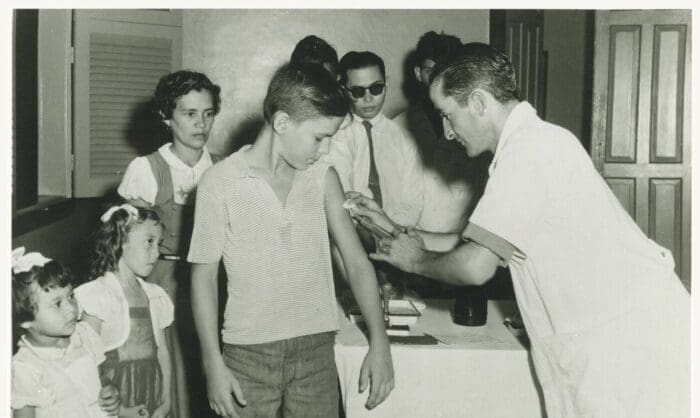
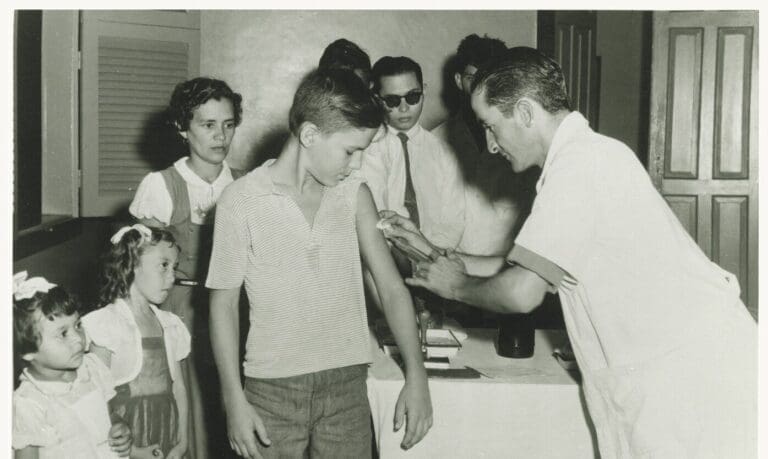
As John D. Rockefeller said, “The best philanthropy is constantly in search of the finalities—a search for a cause, an attempt to cure evils at their source.” This approach has produced such breakthrough work as the professionalization of public health, the development of a vaccine against yellow fever, the “Green Revolution” in Latin American, Asian and Indian agriculture, and the creation of public-private partnerships to develop promising new vaccines.

Now, as at our founding, we work to identify and solve some of the world’s most pressing problems. Yet, while our mission has not changed, the world around us has, and we and our work must change with it, and are doing so.

analysis and planning papers:
The Rockefeller Foundation Today
Responding to the Challenges of the 21st Century
New Conceptions, New Directions
Prospects for Development Thinking and Practice

How We See the World

For the arenas in which the Rockefeller Foundation works, the central reality of the modern world is globalization. Globalization is the product of world-wide revolutions in the technology of transportation, finance and especially information. It is in our time what industrialization was at the time of our founding: neither an intrinsically good or bad thing, but a pervasive and irreversible trend, with implications both beneficial and challenging.

Globalization represents increased interconnection and interdependence; it also spurs transitional conflict and sometimes exacerbates inequities. Globalization produces both increased risks and increased opportunities. New opportunities, many the result of the spreading benefits of scientific and technological innovation, create the potential for dramatic improvement in economic conditions, stemming poverty overall. At the same time, in some places and within some groups, risks are increasingly shifted to individuals, creating greater economic vulnerabilities for many and causing some people to fall farther behind.


What We Do

The Rockefeller Foundation supports work around the world to expand opportunities for poor or vulnerable people and to help ensure that globalization’s benefits are more widely shared. It is one of the few institutions to conduct such work both within the United States and internationally.

Our initiatives are largely focused in a small group of areas in which the Rockefeller Foundation may play a special role by virtue of our history and legacy: global health, agricultural productivity, innovation for development, economic resilience and urban life. These areas may change from time to time—while remaining consistent with our core strengths and global perspective-- as work is completed and new, pressing opportunities arise.

We organize our operations by time-bound initiatives, rather than by program areas. Initiatives take many forms and use many methods, but nearly all draw on our long-held beliefs in creating opportunities for the world’s poor or vulnerable people by spurring entrepreneurship, promoting innovation, building human and institutional capital, catalyzing the creation of new fields and expanding access to and distribution of resources.

We endeavor to be strategic in our grant-making, and therefore concentrate our resources where they will have the greatest impact.

We try to avoid the temptation to engage in areas where others are more appropriately involved -- in many cases public entities (especially where large sums of money are required). We recognize that our resources alone are generally insufficient to adequately support basic research, or to take most innovations to scale. We seek and welcome opportunities for new partnerships and new networks.

We relentlessly press the advantages of our history and structure. Among these: a capacity for the calculated risk that underlies most innovation, for venturing where others remain reluctant to go; an ability, while ultimately insisting on measurable results, to be patient in developing sustainable solutions rather than illusory quick-fixes; and our heritage, which provides us with both inspiration and standing, including our convening power and also the potential to move not just money but minds and policies.

It is not the investments that determine how any great organization is judged, but the outcomes of those investments. For us, those outcomes are guided by our ability to innovate, influence, and, in the end, to generate impact.

By innovate, we mean the ability to identify more than just what is new. It means being both creative and expansive in how we identify and understand deep contextual challenges and flexible and agile in how we devise and deploy potential solutions.

Influence is a critical currency in today’s rapidly changing world, where the complexities of market systems, governmental structures and cultures interact and compete for limited resources and advantage. The capacity to gain, retain and leverage influence in order to catalyze opportunities is essential to our efforts.

Impact is tangible, identifiable and in many cases, measurable. We focus our attention on issues and places not only where we know that change is needed, but where we have a real ability to affect change.


How We Work

Our work begins not with some top-down plan for the improvement of societies or an official model of economic development, but with a search for new ideas with unusual potential for significant impact.

We seek out these ideas in both traditional and non-traditional manners. We seek ideas that are rooted in facts, and work to analyze facts from diverse sources and in fresh ways. We look to current academic thought and literature, and to the perspectives of those already working in fields we are exploring (grantees and prospective partners), but we also directly seek out the views of the ultimate beneficiaries of our work, and regard these views as a key element in shaping our own perspectives. We work with and value strategic partners who enhance our ability to listen to the potential beneficiaries of our investments.

We select the ideas that form the heart of initiatives we undertake based on their potential for significant impact. Each such initiative addresses a problem with severe consequences and has the potential to positively affect a large number of poor or vulnerable people.

Our initiatives are also situational. Almost all are selected because an opportunity for impact has been created by the potential to break a bottleneck, surface a new issue or re-frame an old one, take advantage of a current or anticipated tipping point, or, with partners, scale-up a proven solution.

Moreover, our initiatives are designed with specificity. Each has a clear timeframe, with identified activities and products, and a projected endpoint. While initiative timeframes will vary, each is both intended and required to yield some measurable outcomes within at most three to five years. Some of the complex problems we address demand longer-term solutions, but this requirement helps ensure that each initiative is either achieving impact, or being modified in order to do so, or is abandoned because impact has proven beyond our reach. This requirement of short-term outcomes as well as long-term objectives also helps promote flexibility in our operations, and constant receptivity to new ideas and new work.

We implement our initiatives with rigor. We require that our grantees have proven or well-justified operating models designed to yield impact, committed and capable leadership, a plan for sustainable outcomes and an open, ongoing and transparent approach to evaluation and learning. We use the full range of our own assets and capacities to support each of our initiatives. And we learn from our efforts, and help others to do so, seeking to identify, measure and disclose what works and what doesn’t. Because we take calculated risks, we do not expect always to succeed. Because we assess, we expect to succeed more often, to effect more change, to have greater impact.


2006 Rockefeller Foundation Annual Report2006 Annual Report The test of our work must be found in results, in literally changing the world, in impact...What endures from philanthropy is not how hard we try, or how clever we may be, or even how much we care. ...ultimately what is remembered is how we have been able to improve lives...
            --Dr. Judith Rodin
In the 2006 Annual Report

Tax Return/Financials
2006 Tax Returns: Form 990-PF | Form 990-T
2005 Tax Returns: Form 990-PF | Form 990-T
Press Releases

Speeches
Videos & Transcripts
News
2007 Archive | 2006 Archive

History

Board of Trustees

Leadership

Governance
    Charter
    Social Investing Guidelines
    Bylaws
    Code of Conduct
Careers

Contact

Terms of use